Buried Gold: The Weird Science of Why the Reject Pile Hits Different
There's a particular kind of listener who hears a B-side for the first time and immediately feels cheated. Not by the artist, but by time itself. Like they've been walking past a door for years and someone finally handed them the key. That feeling—that mix of discovery and low-grade injustice—is basically the founding emotion of B-side culture.
And it's not a small culture. It's got its own language, its own economy, its own heated arguments on forums at 2 a.m. over whether a track was shelved because it was too weird or too good.
The Logic That Doesn't Always Add Up
Ask a label A&R rep why certain tracks get cut and the answer usually sounds sensible: wrong tempo for radio, too long, too experimental, doesn't fit the album's arc. These are real considerations. The music industry has always run on formats, and formats have always had rules.
But logic and greatness don't always move in the same direction. Prince recorded somewhere between 500 and 1,000 songs that were never officially released during his lifetime. The Smiths put "Please Please Please Let Me Get What I Want" on the B-side of "William, It Was Really Nothing" in 1984—a song that clocks in under two minutes and has been covered, sampled, and soundtracked more moments of teenage despair than almost anything on their actual albums. The Rolling Stones buried "Memo from Turner" on a soundtrack before most people caught up with it.
The pattern keeps repeating across genres and decades. Something gets shelved, and the people who find it later treat it like evidence of something the mainstream got wrong.
What Collectors Actually Know
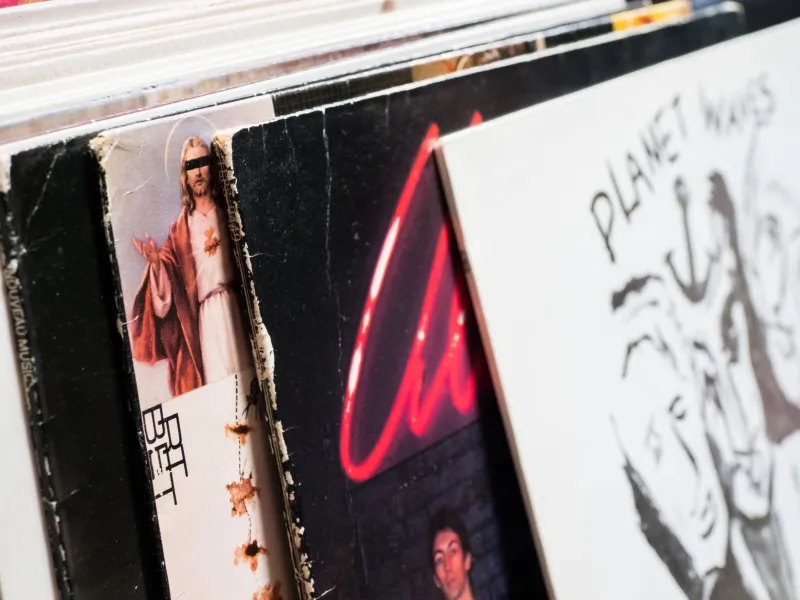
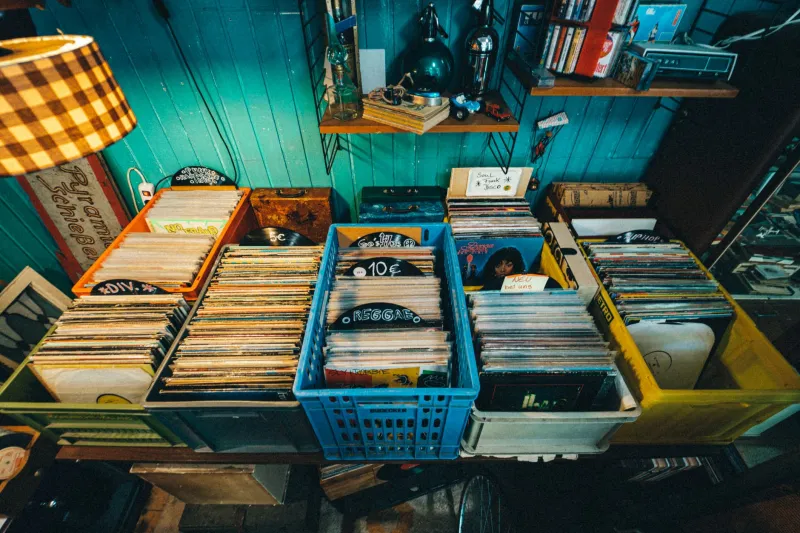
Spend any time in a serious record shop—the kind with handwritten genre dividers and a dog sleeping near the jazz section—and you'll find people who have built their entire listening lives around the flip side. Collectors who dig through dollar bins aren't just hunting bargains. They're running their own quality-control operation on history.
Denver-based archivist and collector Marcus Webb has spent fifteen years cataloging regional soul 45s from the late '60s and early '70s. He's matter-of-fact about why the B-side often wins. "Labels were making commercial bets, not aesthetic ones," he says. "The A-side was what they thought would sell. The B-side was where the artist sometimes got to do what they actually wanted."
That creative latitude—however accidental—creates a different kind of recording. Less pressure, less second-guessing, less committee. Some of the loosest, most alive-sounding tracks in the soul and funk canon exist because nobody was paying close enough attention to stop them.
The Psychology of Scarcity
There's something else going on, though, and it's worth being honest about it: scarcity shapes taste. The harder something is to find, the more significant it feels when you do. That's not cynicism—it's just how human attention works. A track you had to hunt down, trade for, or stumble across on a bootleg compilation carries a different emotional weight than something that was spoon-fed to you on a playlist.
This is part of why streaming has a complicated relationship with B-side culture. When everything is theoretically available, nothing feels like a discovery. The architecture of a streaming platform flattens the experience—a deep cut sits next to a chart-topper with no visual or contextual difference. No physical artifact, no story attached to the format.
The collectors and archivists who've preserved this material often talk about the context of the find as inseparable from the music itself. You remember where you were when you first heard it. You remember who played it for you, or which thrift store bin it came out of.
Artists on Their Own Rejects
What's stranger is talking to the people who actually made the music. Musicians have a complicated relationship with material that got shelved. Some are embarrassed by it. Others are quietly proud. A surprising number are genuinely confused about why it didn't make the cut.
A Nashville-based songwriter who's written for both country and Americana acts—and asked not to be named because of ongoing label relationships—described the experience of watching a song she considered her best work get cut from an album and then become the most-requested track at the artist's live shows. "The label said it didn't have a hook. The audience found the hook on their own," she said. "I stopped trusting the gatekeepers after that."
That's a sentiment you hear a lot. The gatekeepers—whoever they are at any given moment in music history—are working from a model. The model is imperfect. And the stuff that falls through the cracks sometimes turns out to be the most durable.
Why the Underground Keeps It Alive
B-side culture has always been a distributed operation. Before the internet, it ran through fanzines, tape trading, and word of mouth at shows. Someone in Ohio would mail a cassette to someone in Portland who'd make copies for three other people. The music moved slowly but it moved with intention—every listener who passed it along was making an active choice to keep it alive.
The internet didn't kill that impulse, it just changed the infrastructure. YouTube channels dedicated to rare pressings, subreddits organized around specific labels or eras, Discord servers where people share needle drops from 45s that never got digitized. The tools are different but the motivation is identical: these listeners feel a sense of responsibility toward music that the industry abandoned.
There's a word that comes up constantly in these communities—stewardship. The people who care about B-sides don't just want to listen to them. They want to make sure someone else gets to hear them too.
The Reject as Mirror
Maybe the deepest reason B-sides hit different is what they reveal about the gap between commerce and art. Every shelved track is a small record of what the industry decided wasn't worth your time. When those tracks find their audience anyway, decades later, it's a quiet kind of vindication—not just for the music, but for the listeners who trusted their own ears over the chart.
That's the frequency SubFreq runs on. The stuff that didn't get the push, the promo, the placement. The stuff that survived anyway because it was good enough to be found.