Everything the Download Left Behind: Mourning the Physical Album Experience
The Thing You Held in Your Hands
There was a ritual to it. You got the record home, you slid it out of the sleeve or cracked the jewel case, and before you even put the thing on, you read. You looked at who played what. You found the studio where it was recorded, the engineer who mixed it, the person the artist thanked first. You studied the photography. You read whatever the artist had chosen to say — a poem, a rant, a dedication, sometimes just a list of influences that sent you off in a dozen new directions.
This was not a secondary experience. For a lot of devoted music listeners, it was inseparable from the listening itself. The liner notes were part of the work.
Streaming didn't just change how we access music. It quietly amputated an entire layer of how we understand it.
What Liner Notes Actually Did
It's worth being specific about what's been lost, because "liner notes" is a term that gets used loosely. What we're really talking about is physical documentation — the complete package of contextual information that used to accompany a record.
Credits told you who made the music. Not just the artist's name, but the session musicians, the producers, the engineers, the string arrangers, the backing vocalists. This information was how fans traced lineages, discovered new artists, and understood the collaborative nature of recording. If you loved a particular guitar sound on a record and saw the same player credited on three other albums, you had a thread to pull. That thread doesn't exist in a streaming interface.
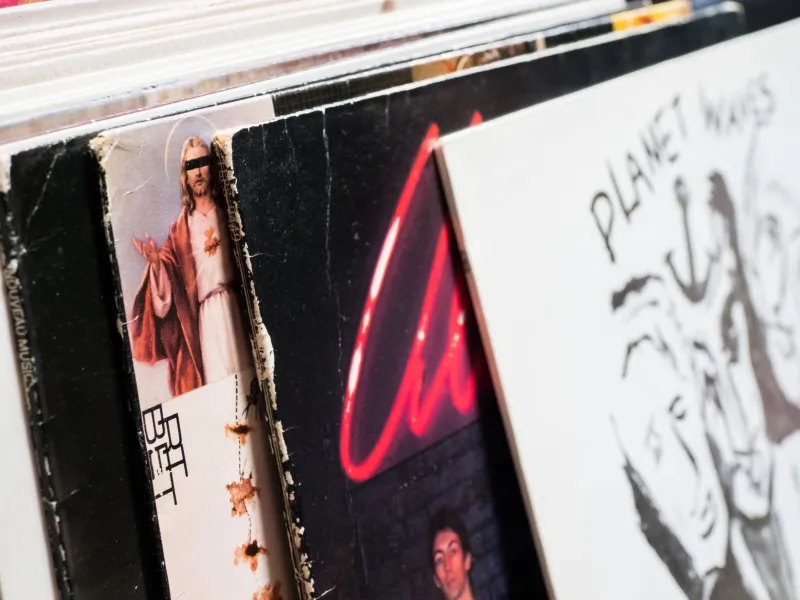
Artwork established a visual identity for the music. The relationship between what you saw and what you heard wasn't incidental — for artists and designers who cared, it was deeply intentional. The gatefold spread, the back cover photograph, the font choices: these were decisions made in conversation with the sound. Streaming thumbnails — often poorly reproduced, sometimes algorithmically generated — are not a replacement. They're a placeholder.
And then there was the written content: the actual liner notes, which could be anything from a paragraph of thank-yous to an extended essay. Some of the most interesting writing about music has appeared in liner notes. Miles Davis's original Columbia releases came with essays by influential critics. The Clash's London Calling included a detailed political statement. Joni Mitchell wrote extensively about her compositional process in her album booklets. None of that transfers to a streaming service.
Artists Who Treated the Package as Part of the Art
For certain artists, the physical release was never just a delivery mechanism. It was a creative object in its own right.
Prince was meticulous about every visual element of his releases — the packaging for albums like Purple Rain and Sign O' the Times was as carefully considered as the music itself. The liner notes for his later independent releases often included lengthy personal statements and theological reflections that were genuinely impossible to separate from the context of the work.
Laurie Anderson's Strange Angels came with an elaborate booklet that extended the album's conceptual framework. D'Angelo's Voodoo included photography by Jonathan Mannion that established a visual language for the whole record. Radiohead's Kid A came with artwork by Stanley Donwood that was created in parallel with the music, not applied afterward.
When you stream these records, you get the audio. You get approximately one-eighth of the intended experience.
"I spent as much time on the packaging as I did mixing the record," says one independent artist who asked not to be named because they still have a label relationship. "The photos, the layout, the specific paper stock — all of it was chosen to say something about the music. When someone streams it, they're getting the music, but they're missing the argument I was making about the music. Those are different things."
The People Keeping It Alive
Not everyone has accepted the stripped-down streaming default. A loose coalition of independent labels and artists has treated the physical release as a deliberate act of resistance — and in some cases, as a commercial strategy.
Labels like Mississippi Records in Portland, Numero Group in Chicago, and Light in the Attic in Seattle have built their identities partly around the quality of their physical releases. Their reissues and archival compilations come with extensive liner notes — often essay-length — written by scholars, critics, and people with direct connections to the artists. These aren't afterthoughts. They're core to the product.
Numero Group's releases, in particular, are known for the depth of their documentation. Their compilations of overlooked soul, gospel, and regional music often include photographs sourced from artists' personal collections, oral histories, and detailed session information that took years to compile. The physical object functions as a historical document, not just a music delivery format.
On the artist side, a growing number of musicians releasing independently have made elaborate packaging a selling point precisely because streaming has made it unusual. Hand-numbered editions, risograph-printed inserts, handwritten notes: these details signal to a specific audience that this is music that wants to be owned, not just accessed.
What New Listeners Are Missing Without Knowing It
Here's the harder part of this conversation: a generation of listeners has grown up without the physical album experience and genuinely doesn't know what they're missing. You can't mourn the absence of something you never had.
But the loss is real even if it's invisible. When a listener streams an album with no access to credits, they're getting music without attribution. They may not know who played the instruments, who engineered the sound, who wrote the songs. This flattens the listening experience in ways that are hard to quantify but easy to feel — the music exists in a kind of context vacuum, disconnected from the human labor and creative decisions that produced it.
There's also the question of intentionality. When an artist sequences an album and designs its packaging, they're making an argument about how the music should be experienced. Streaming, which encourages shuffling and playlist-building, works directly against that argument. The liner notes were one of the ways artists communicated their intentions. Without them, the listener is working with less information — and often doesn't realize it.
The Case for the Physical Object
Vinyl sales have been growing for over a decade, and while the numbers are still modest compared to streaming, they represent something real: a constituency of listeners who want the whole experience, not just the audio file.
For the SubFreq audience — people who listen carefully, who care about context, who seek out the overlooked and the specific — the physical album was never just a format. It was a relationship between the listener and the work, mediated by everything the artist chose to include in the package.
Streaming is convenient. It's extraordinary in its breadth. But it trades depth for access, and for a certain kind of listener, that trade is not neutral. The liner notes weren't decoration. They were part of how music made meaning. Getting them back, even partially, is worth the effort.